
House cleaning in Baltimore is often treated as a universal routine involving the same basic tasks: vacuuming, dusting, washing surfaces, and removing clutter. In practice, however, the most effective cleaning routine can vary significantly depending on where a home is located. Climate, weather patterns, air quality, surrounding landscapes, building materials, and seasonal conditions all influence the types of dirt and contaminants that enter a home. A cleaning strategy designed for a dry desert environment may not be suitable for a humid tropical region. Understanding these geographical differences allows homeowners to focus their time and resources on the problems most relevant to their surroundings.
Humid Climates Require more Attention to Moisture
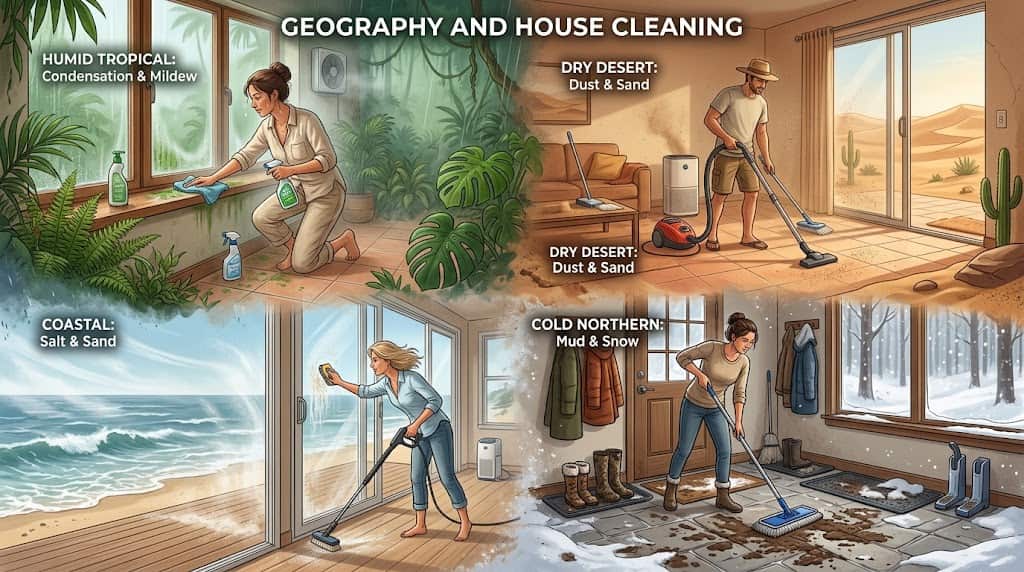
Homes in humid tropical and subtropical regions commonly face higher levels of moisture, which can create conditions favorable to mold and mildew growth. Bathrooms, kitchens, laundry areas, closets, and other poorly ventilated spaces may require frequent attention because moisture can accumulate on surfaces and within materials.
Regular cleaning should therefore be combined with moisture control. Homeowners can wipe condensation from appropriate surfaces, clean areas where moisture collects, and improve ventilation where possible. Exhaust fans, open windows when outdoor conditions permit, and properly maintained air-conditioning systems can also help manage indoor humidity.
Upholstery, carpets, curtains, and other absorbent materials deserve particular attention because they can retain moisture and develop unpleasant odors if they do not dry adequately. In these environments, cleaning frequency may need to be higher than in a naturally dry climate.
Dry and Dusty Regions Create a Different Challenge
In arid and semi-arid regions, moisture may be less of a concern, but dust and fine particles can become persistent cleaning problems. Wind, dry soil, construction activity, and surrounding undeveloped land can contribute to the amount of dust entering a home.
These conditions make dust management an important part of household cleaning. Frequently used surfaces, floors, window sills, vents, and furniture may accumulate visible dust quickly. Door mats and entryway cleaning can help reduce the amount of dirt brought indoors, while regular vacuuming can remove particles from carpets and upholstery.
Air filtration also becomes relevant in particularly dusty environments. Maintaining HVAC filters according to manufacturer recommendations can help keep household systems functioning properly while supporting better indoor air management.
Coastal and Cold Regions Bring their own Cleaning Demands
Geography can affect homes in less obvious ways. Coastal properties may experience exposure to salty air, elevated humidity, sand, and wind-driven moisture. Salt residue can accumulate on windows, exterior surfaces, fixtures, and other exposed materials. Regular cleaning can help prevent buildup from becoming difficult to remove.
Colder regions present different seasonal challenges. Snow, ice, mud, and road debris can be carried indoors on shoes, clothing, and pets. Entryways and floors may therefore require more frequent cleaning during wet or snowy periods. Indoor air quality can also become an important consideration when homes remain closed for extended periods because of cold weather.
Seasonal cleaning routines should account for these changes rather than maintaining exactly the same schedule throughout the year.
Local Materials and Landscapes Influence Cleaning Needs
The construction and surroundings of a home can also determine which cleaning tasks deserve priority. Homes surrounded by trees may accumulate leaves, pollen, and organic debris around windows, entrances, gutters, and outdoor areas. Properties near agricultural land may experience additional dust or soil particles, while urban homes can be affected by traffic-related particles and pollution.
Building materials respond differently to local environmental conditions as well. Wood, stone, tile, metal, glass, and various synthetic surfaces have different maintenance requirements. Cleaning products and techniques should therefore be selected according to the material being cleaned and the environmental conditions it experiences.
Understanding these factors prevents homeowners from relying on unsuitable cleaning methods that could damage surfaces or fail to address the actual source of buildup.
Building a Cleaning Routine Around Local Conditions
There is no single cleaning schedule that works equally well for every household. Geography provides important clues about what needs to be cleaned, how often it should be addressed, and which preventive measures are most useful. Humid homes may need greater emphasis on moisture and mildew control, while dry regions may require frequent dust management. Coastal properties can prioritize salt and sand removal, while colder climates may need stronger seasonal attention to mud, moisture, and indoor air quality.
A geographically informed cleaning routine is ultimately more practical because it responds to the conditions a home actually experiences. Instead of cleaning every surface at the same frequency, homeowners can prioritize areas most affected by local climate, weather, air quality, and landscape. This approach can make household maintenance more efficient while helping protect building materials and indoor living conditions. Cleaning is not simply a matter of keeping a home visually tidy; it is an ongoing maintenance practice shaped by the environment in which that home exists.


